
Introduction
As architects, we embark on a journey to design spaces that not only captivate the eye but also resonate with functionality and sustainability. One critical aspect of this journey involves understanding and incorporating wind analysis into our design process. Nigeria’s varied climate zones, spanning from tropical to arid, present unique challenges and opportunities. In this guide, we will delve into the intricacies of wind analysis, exploring its importance, tools employed, site-specific considerations, and real-world case studies.
Table of Content
Importance of Wind Analysis
Before we dive into wind analysis, it is necessary to understand climate. Climate is the long-term pattern of weather conditions of an area tracked over a period of at least 30 years. It can be divided into two categories which are macro-climate and micro-climate. Macro-climate involves the weather conditions that are formed by global patterns, while micro-climate involves weather conditions when a global weather pattern meets a local condition i.e., topography, natural or man-made physical features.
In understanding the importance of wind, it is important to understand that two categories of winds can be present on any site. These are winds formed by macro and micro-climates. The macro-climate in relation to wind gives us the prevailing winds in an area, while the micro-climate provided us with local winds caused by either natural (vegetation, topography) or man-made (existing buildings) features of a site.
Wind analysis is the basis in the creation of buildings that seamlessly blend aesthetics with functionality. In Nigeria, where the weather varies a lot from various regions, using the wind’s power in designs becomes really important. By conducting a thorough wind analysis, architects can optimize natural ventilation, passive cooling, and overall energy efficiency.
Types of Prevailing Winds in Nigeria
a. North-East Trade Wind
The North-East Trade Wind also known as the Tropical Continental Airmass is the wind which blows from across the Sahara Desert through Niger republic to Nigeria from the north-eastern part of the country. It is a cold dry and dusty wind that causes dry and dusty weather and it blows between November to February which makes up the harmattan period.
b. South-West Trade Wind
The South-West Trade Wind also known as the Tropical Maritime Airmass is the wind which blows from across the Atlantic Ocean to the southern coast of Nigeria through the south-western part of the country. It is warm and moist air that normally blows between March to November which makes up the rainy season.

Site-Specific Considerations
This helps us understand the micro-climate of a site. To truly grasp the influence of wind on a site, architects must consider the specific characteristics of the location:
a. Topography
The surrounding topography can significantly affect wind patterns. Analyzing hills, valleys, and open landscapes provides valuable insights into potential wind channels and windy areas.

b. Surrounding Buildings
Adjacent structures can either obstruct or enhance airflow. Evaluating nearby buildings helps architects design structures that work in harmony with the existing environment.

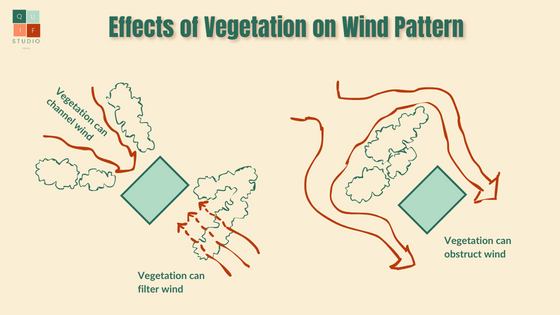
c. Vegetation
Trees and other vegetation impact wind patterns. Integrating landscaping elements strategically can both harness and buffer the wind, contributing to a comfortable microclimate.
Design Considerations
a. Building Orientation
Optimal building orientation is key to maximizing or mitigating prevailing winds. A thoughtful approach ensures that structures work in tandem with the environment, enhancing natural ventilation and passive cooling.
b. Form and Facade Design
Architects must consider building shapes that minimize wind resistance, especially in areas prone to strong winds. Façade designs should prioritize controlled ventilation and even wind pressure distribution.
Tools for Wind Analysis
For architects navigating the complexities of wind patterns, several tools prove invaluable:
a. Anemometers
These instruments measure wind speed, providing crucial data for understanding the force and potential impact of wind on a building.

b. Wind Vanes
Determining wind direction is essential for designing structures that respond effectively to prevailing winds. Wind vanes help architects make informed decisions about building orientation.

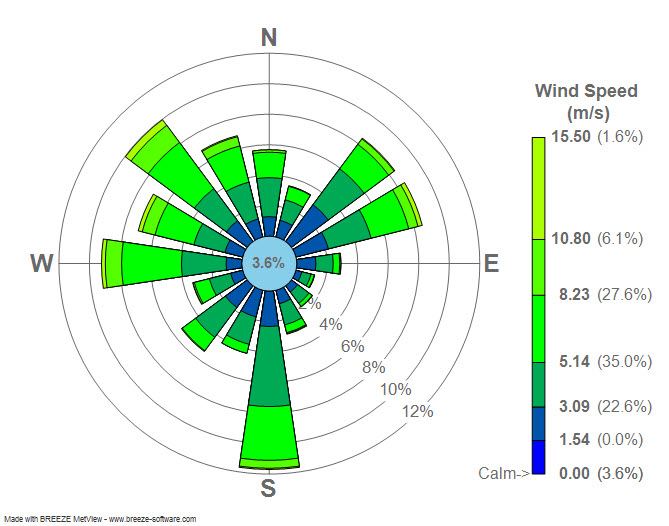
c. Wind Rose Diagrams
Wind rose diagrams provide a clear visualization of wind patterns, showcasing the frequency and direction of prevailing winds over time. These diagrams are instrumental in understanding the dominant wind directions and planning accordingly.
d. Computational Fluid Dynamics (CFD) Simulations
Advanced simulations allow architects to visualize and analyze wind patterns in a digital environment. This aids in predicting airflow, pressure differentials, and potential areas of concern.
Case Studies
Lets take a look at how architects successfully integrated wind-responsive designs in various Nigerian climate zones:
a. Tropical Climate – Courtyards for Natural Ventilation
In tropical regions, architects leverage courtyards to facilitate natural ventilation while maintaining privacy. These open spaces create a cooling effect, enhancing the overall comfort of the occupants.
b. Arid Climate – Aerodynamic Building Shapes
In arid regions, where wind loads can be substantial, architects employ aerodynamic building shapes to minimize resistance. This not only improves the building’s resilience but also enhances its energy efficiency.
Sustainable Design Integration
Wind analysis aligns seamlessly with sustainable design principles, offering architects the following benefits:
a. Reduced Reliance on Mechanical Ventilation
By designing with natural ventilation in mind, architects can reduce dependence on mechanical systems, contributing to energy efficiency and sustainability.
b. Enhanced Occupant Comfort
Balancing wind analysis with design considerations results in spaces that prioritize occupant comfort without excessive energy consumption.

Challenges and Solutions
Navigating wind analysis presents challenges, but architects armed with knowledge can overcome them:
a. Strong Winds in Open Landscapes
Strategically placing windbreaks and using site features to channel and buffer wind can mitigate the challenges posed by gusty winds in open landscapes.
b. Balancing Natural Ventilation with Privacy
In dense urban environments, architects face the challenge of balancing the desire for natural ventilation with the need for privacy. Innovative façade designs and landscaping can provide effective solutions.
Conclusion
Wind analysis stands as a pivotal component of site analysis in architecture, especially in a diverse country like Nigeria. By understanding and harnessing local wind patterns, architects can create structures that not only withstand environmental challenges but thrive in harmony with the elements. As aspiring architects, embracing the intricacies of wind analysis sets the stage for designs that are not only visually captivating but also sustainable and resilient.
In our next post, we will explore the role of solar analysis in architecture, continuing our journey toward creating spaces that seamlessly integrate with their environment. Stay tuned for more insights and practical tips on architectural design!