
Education, Tips and Tricks

How to get over your fear of presentations

Presentations are inevitable as an architecture student. Be it from simple assignments to design juries, you cannot escape it. Unfortunately for some students, presentations are their worst fears. The whole idea of being in front of a crowd can be terrifying, but the harsh truth is that you need to overcome that fear and be comfortable in your own skin. Being able to communicate your ideas is essential as an architect. Imagine being offered a contract by Dangote but because you’re too scared, you end up missing what might have being the biggest contract in your life. Now I find that terrifying, but fear not my friends because I have some tips that might help you get over your fear.

The first thing you need to know is that you need to accept who you are as a person and use that to your advantage. Do you have a nice smile? Smile while talking. Are you considered charming? Charm your audience. Are you funny? Add a little humour. Just do anything that makes you comfortable in your own skin. Don’t go to far. Don’t try to impress. Just be you!

Study your audience! This cannot be over emphasized. Your lecturers can be of different personalities and you need to study them carefully. Knowing how they react to certain things gives you an upper hand in being prepared for any criticism.

Study your presentation well. You need to be fully prepared for any presentation. Go over your work to make sure there aren’t any obvious mistakes. You can make small note cards to write down all your important points. Practice before the time of the presentation with your friends and family, or you can practice in front of a mirror (it actually helps).

Your appearance matters! The right outfit will surely boost your confidence level. Don’t be afraid of getting all dressed up for a presentation. It assures your audience that you are confident and that they should probably pay attention to this fabulous person.

Control your facial expressions. If you’re like me and you have a problem accepting corrections without it showing on your face, then this tip is for you. Find a good friend that reminds you to smile after every few minutes to avoid coming off rude.

Don’t be afraid of criticism! Nothing in this world is perfect, therefore your work can’t be 100%. You need to work hard, give it your best shot, and pray for the best. Criticism is not the end of the world. It could just mean that you’re not on the same page with that person or you need to work a bit harder next time.

Finally, and this is just a piece of advice, you can use all these tips and that day of your presentation may just not be your day. Life is full of ups and downs. You could do everything right and may end up having a bad day. It could be from you, or someone from your panel may give you a hard time for no obvious reason. I know the feeling and it sucks, but there’s always a silver lining to things. It may not turn out to be so bad. I have a classmate who had an awful design jury but ended up getting an A. So don’t be too hard on yourself if things don’t go as planned. Its just how life is.

These are the few tips I built on over the years. I hope this helps you in your future presentations and if there’s any thing that helped you personally don’t hesitate to share it in the comment section below. Thank you for reading and stay tuned for more posts!
Education, Tips and Tricks

How to get the best out of the studio (studio culture)

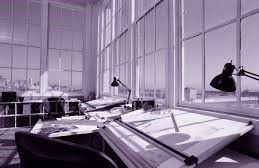
The studio is a place where imaginations and ideas come to reality, it is a place where ideas are born, where creativity finds its place, it is the sanctuary of the architecture student. To get the most out of it, one must relate with his/her colleagues. The one thing you share in common, which is the most important thing is design. Although, one’s measure of creativity varies by far or less with the other, the main aim is to learn, to learn to share, to experience, to interact, to get comfortable and engage in each and every studio activity.

I remember when I was in school, at the studio there were so many different personalities. Everyone had different taste in almost everything, and design was not an exception. At the beginning, being in the studio was almost boring, but then we began to understand each other, bit by bit, we interacted, we understood our differences, we began to learn from each other, and eventually we became friends with each other. Everything else turned out to be fun. We helped each other, not with our designs only, but with ideas as some of us had better experience at so many things than the others but we learnt the most out of anything together.

The point here is don’t refuse to interact with your colleagues. Don’t isolate yourself from your colleagues, because you’ll miss out on so many things. Here are some tips to get the most out of your studio:

  1. Never fail to learn, engage, and interact.
  2. Learn to plan: make a studio timetable, know the hours to spend at the studio, know when to take a break and let off some steam, know when to continue and when to stop, but never quit.
  3. Learn to make good research, and case study of your design, talk about your ideas with our lecturers.
  4. Do not refuse to improvise, always.
  5. Always have in mind that the design isn’t just about the drawing, it’s important to always learn about the philosophy of the design first, then the process to develop your own idea from it, then the ability to put it down perfectly.
  6. Never refuse to heed to meaningful corrections.
  7. Whenever you think about an idea, put it down on paper.
  8. Take your design seriously, and always make time for it, it should be on your top priority list.
  9. Learn to make neat and presentable sketches, especially of new ideas, or imaginations.
  10. Always go for consultations and make the corrections.
  11. Learn to make a good presentation of your design.
  12. Take good care of your drawing tools/instruments, and do not misuse them.
  13. Lastly, have fun!

These are some few tips (from experience), to make the best out of your studio, and bring out the best in you. Be part of the studio, for it is your home too, it’ll help build and shape your initiative. As they always say, “failing to plan, is planning to fail”. I hope you find this helpful and learn from it.

Stay tuned for more posts like this from Quif Studio. Thanks.

Education, Tips and Tricks

What to expect studying Architecture in Nigeria

Personally, what led me to architecture was the mere thought that it was mainly a combination of mathematics, physics and art. I love mathematics, weird right? I love anything that deals with calculations and experiments. What’s funny is that I was interested in being a medical doctor, but I hated studying. I hated being in front of books for long hours, I would definitely doze off. So, I had to decide and by doing some research I came across architecture. It had the 3 things I loved; mathematics, physics and art (or so I thought).

Architecture is a course that is both a science and an art. Along the four-year journey, courses like history, sociology, psychology, law, geography, engineering, mathematics, and physics are what you would likely encounter. There might be other courses from other related fields such as quantity survey, estate management, urban and regional planning, environmental management, and project management. I know what you’re thinking right now. How are these courses related to architecture? How does one cope with learning all these in just four years? What about design? Well ladies and gentlemen, design is a single course on its own. When you think studying architecture is just about design, trust me you are wrong.

In the first year, you mainly deal with general courses like mathematics and physics which every science student usually takes. There are some basic architecture courses like fundamentals of design, graphic communication, introduction to architecture, sociology for architects, etc.

The second year digs a bit more into the field. Architectural design starts from the second year. Building construction, building material science, history of architecture, building physics (building structures), model making, psychology for architects, environmental management, urban and regional planning are mainly dealt with in this year.

The third year is a bit more practical. As one of my lecturers always likes to say, “Architects are made in level 3”. Design is on a larger and more complex scale. Courses are a bit more realistic and practical. Construction, building structures, building climatology, urban design, building services such as acoustics, ventilation, electrical and mechanical services, fire safety and others, are what to expect.

The fourth year is mainly preparing you for life after graduation, life in the field of practice. Building economics, contract and arbitration, and professional practice are the focus of your final year. Your final year project including a written essay and a design project will mainly be what you are focused on.

I know it might seem a bit overwhelming, and don’t even get me started on the long hours of manual drafting in the studio, model making, the enormous workload, assignments, and presentations. One thing you get to take away from all this apart from achieving your dreams of becoming an architect, is that you get to be part of a family. Your classmates become more than your friends, they become your family. A family made in the studio.

Architecture isn’t only about the career, it changes and shapes your way of thinking, your imagination. It makes you see things better, makes you more observant of your surroundings. It also boosts your initiative and sense of creativity. So, let it flow through you, for it is a lifestyle.