Welcome to the launch of a new series called the Architectural Design Stage Series. This series is designed to cover architectural drawing, which is a major part of architectural design. This part of architectural design comes immediately afterPreliminary Design Stage. The information obtained and the decisions made during the preliminary design stage helps in designing site plans, creating floor plans, elevations and sections.
Throughout the course of the series, we will be discussing all the components that go into architectural drawing. Hence, the following is a list of upcoming episodes under this series:
Introduction to Graphic Communication
Understanding the Fundamentals of Design
Designing a Site Plan
Creating Floor Plans
Creating Roof Plans
Creating Sections
Creating Elevations
Perspectives
Stay tuned for this series and comment down below what your expectations are. If you are a student, tell us what your favorite step is, what your least favorite step is, where you think you are lacking the most, etc. I would really appreciate your feedback. You can also email me with any suggestions from my Contact page. This series will also run through Instagram so make sure you check out our page from the links below.
A concept is an abstract idea or invention used to help portray or sell an idea, opinion, theory or conviction. Pretty much like having a theme for a party, the decorations, food, setting and costumes all fall in line with the theme. In architecture, we use concepts as an approach to a design, an abstract that we base a design through its process. When we think of architectural concepts, we think of an abstract idea, one that is unchanging throughout the design process. This is not necessarily the case, a concept can be linked to many factors, and can evolve as the design grows. Architectural concepts are the designers way of responding to the design situation presented to them. They are a means of translating the non-physical design problem into the physical building product. Every project will have critical issues, central themes or problem essences, and the general issues of designing a building can be approached in a number of ways.
The following is a broad category of the approaches used for concepts in architecture:
Functional Approach
This approach normally goes with the famous saying “form follows function” which simply means the form or shape of the building is achieved through the level of functionality of the building. It is considered when the project at hand needs a more functional element rather than an aesthetic one. For example, in the design of a factory or a hospital, where the functionality of the spaces is at the forefront of the design, a functional approach is best suited for the design concept. This approach does not mean that the design must lack aesthetic properties, but it may just be that the function of the building is the key focus.
Material Approach
Choice of materials is an early part of design, and it can also be an approach for a design concept. By focusing on a specific material, we will be naturally led towards particular forms of construction, therefore creating a type of appearance organically. This approach gives room for innovation as selection of local materials gives the public a sense of comfort and familiarity and flows with the natural surrounding. For example, a museum in Kano, Nigeria, can be constructed with sun bricks which is a local building material in the area, which will impact and attract the visitors of the museum.
Gidan Makama Museum, Kano, Nigeria designed with locally sourced materials (Source: Daily Trust)
Contextual Approach
This approach usually looks at the context of the site and surroundings, the historical features of the area, the people that occupy the area. This approach is heavily drawn from site analysis, exploring the data collected about the site, which may be physical and non-physical data. This does not always mean that a design must fit into the context of its surroundings, but some designers tend to create a contrast between the old and the new. For example, a house to be built within a rocky area, may tend to have stone finishing, an edgy design etc., while on the opposite hand, a modern house designed within the midst of old classical houses.
Michael Lee-Chin Crystal, an addition to the Royal Ontario Museum, Toronto designed by Daniel Libeskind (Source: Architectural Digest)
Conceptual Approach
This approach deals with designs that are based of a concept or an idea. This is the most common concept known to students, as they base their designs on certain abstract ideas which may be an object or an item. Conceptual architecture is sometimes never built, but rather designed as a form of thought provocation, exploration of ideas. An example of this approach is the Burj Al-Arab in Dubai where the concept originated from a sail.
Burj Al-Arab, Dubai (Source: Pexels)
Philosophical Approach
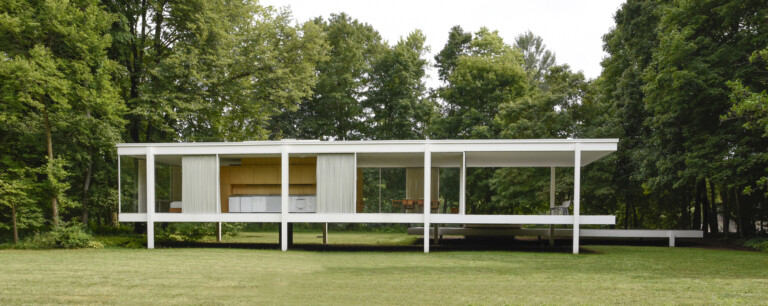
Another approach to architectural concepts is to consider your design philosophy. This is a set of values you use to inform your design. The values could be the life values of the designer, or could be a reflection of the design brief or context of the site, or indeed a combination of all three. A good example of an architect that uses this approach is Ludwig Mies van der Rohe, who is famous for his saying “less is more”. He emphasized on simplicity and often used steel and glass as building materials.
Fransworth House by Ludwig Mies van der Rohe (Source: fransworthhouse.org)
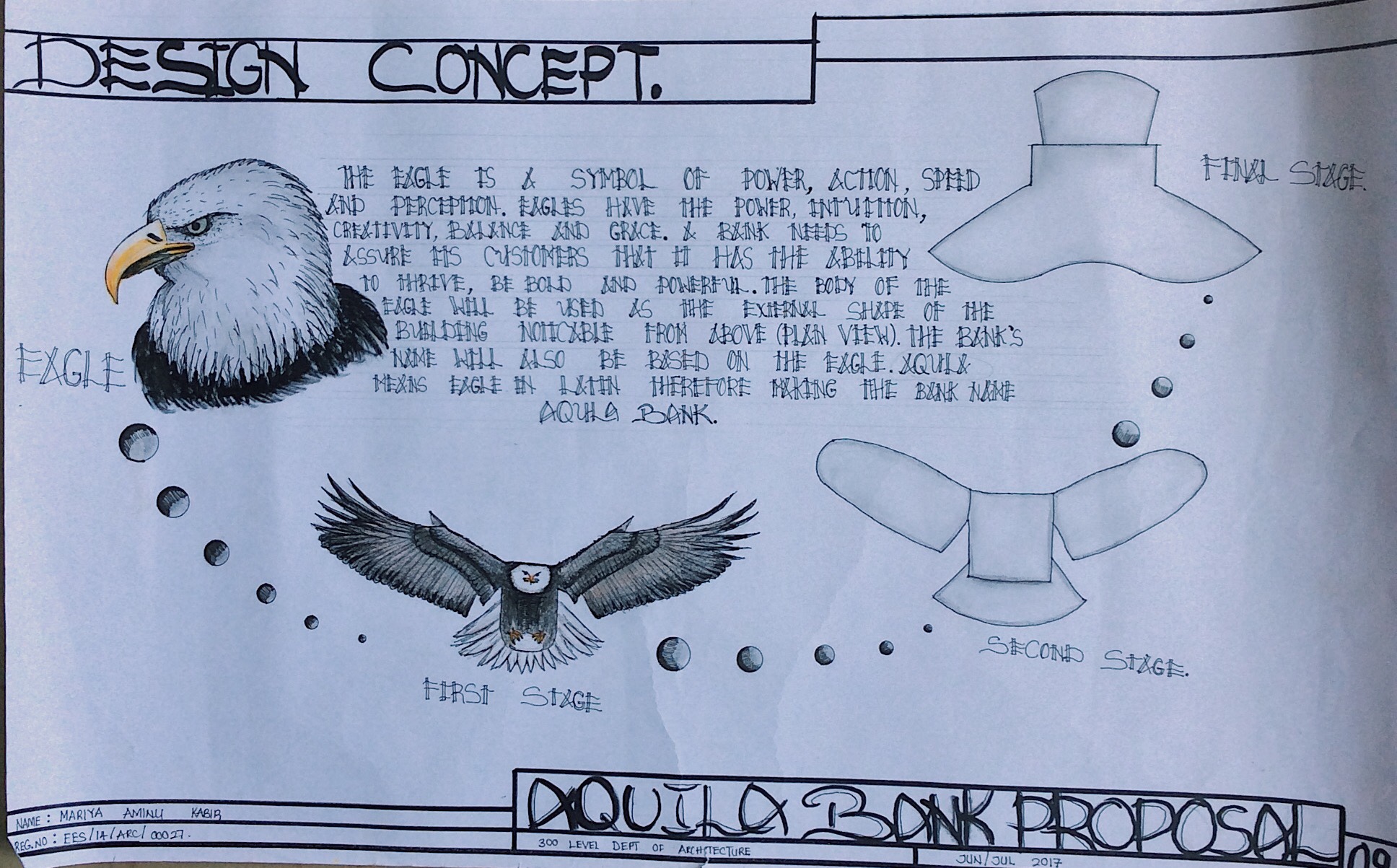
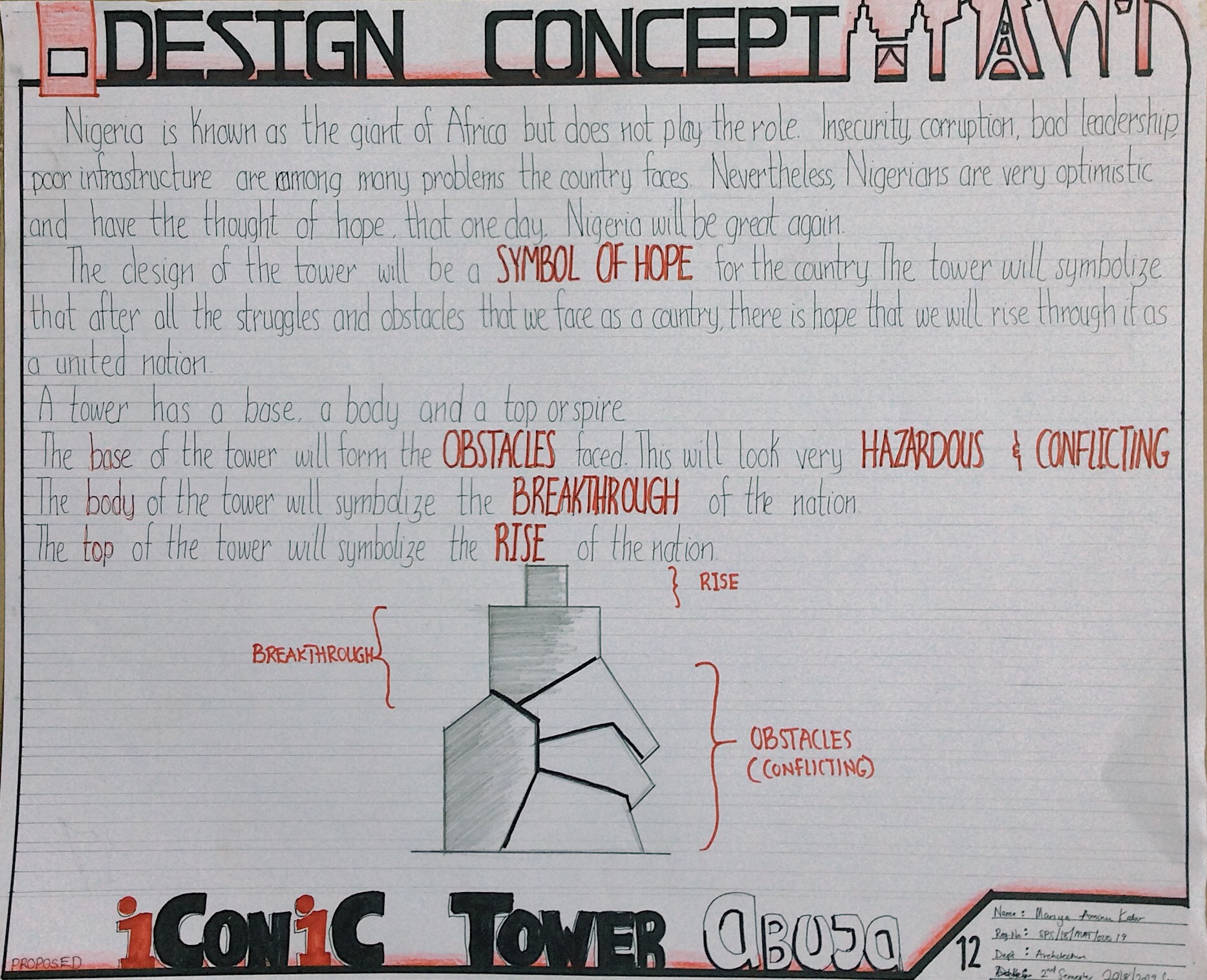
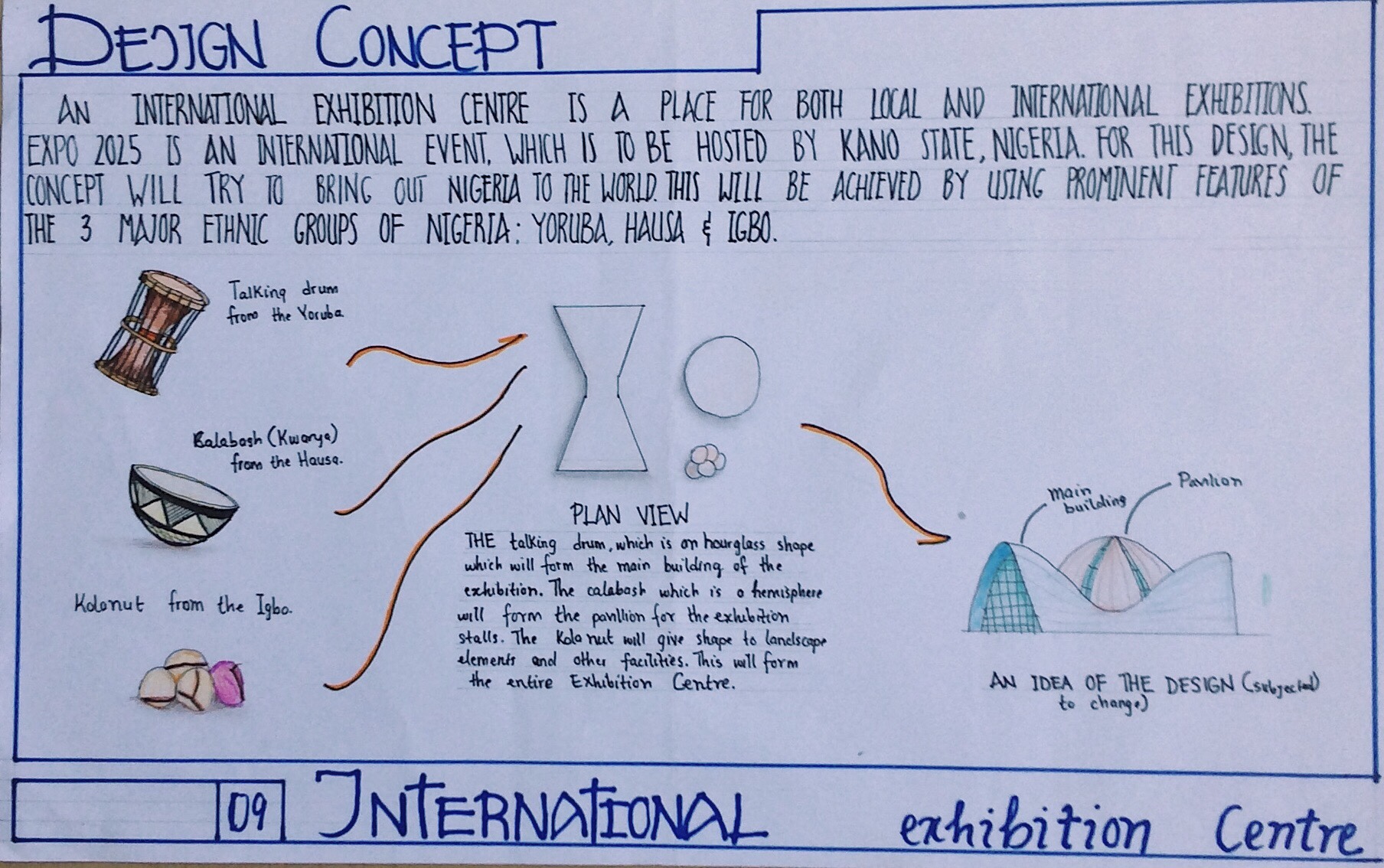
After choosing an approach, the next step is narrow done the details of the concept and how it relates to the design. Sketches will come into play as you need to translate the concept into a diagram which will reflect into the design. This will later be developed into floor plans, elevations, or any part of building that the concept adapted comes into play with. Below are some examples of design concept sheets in architecture:
Design Concept for a BankDesign Concept for a Skyscraper Design Concept for an International Exhibition Centre
All spaces are designed to revolve around the human being. The design of spaces is derived from how the user interacts with his environment. The human body is a unique design on its own that works within a unique ratio and proportion, therefore, the design of the surrounding environment is inevitably planned to be functional and compatible with the user. Space analysis is a tool that helps architects assign measurements to proposed spaces in order to achieve functionality in design.
How are these measurements achieved?
Fig. 1 Basic Human Dimensions
These measurements are achieved by analyzing the space needed for basic and comfortable movement, the objects to be placed within the space, and how the user will interact with those objects. For example, in a bedroom, there will be movement from the entrance of the bedroom to the bed, closet/wardrobe, drawers, tables etc. There will also be movement from some objects to another, and movement caused by interacting with an object within the bedroom like using the closet, sitting at a table etc. Below is an example of some basic dimensions:
From these dimensions and the dimensions of furniture and fixtures, we are able to assign appropriate sizes to spaces in a building. All these dimensions and sizes are then later inputted into a document called Schedule of Accommodation.
A schedule of accommodation is a list of accommodation facilities and provisions required by the client or user of a building project. It is usually developed during the preliminary design stage by the architect. The preparation of a schedule of accommodation helps to determine the minimum space requirements for the building.
It may include:
Room reference number.
Room location (for example, building name / floor).
Room name.
Room type / description.
Room size (i.e. floor area, and sometimes dimensions, which may include height).
Number and type of occupants.
Relationships between rooms and groups of rooms.
Furniture, fixtures and equipment (FF&E) requirements.
Environmental conditions required (i.e. temperature range, humidity, air movement, acoustic conditions, lighting levels and so on).
Total areas.
Exclusions (such as circulation spaces).
Fig. 4 Bedroom Space Analysis
Fig. 4 shows the analysis of a bedroom space for one occupant. The minimum dimensions for a bedroom is 3m by 3.6m which is proven above using the basic spaces required for the user to interact with his/her space and the area of the furniture provided. These dimensions help in the planning of space more adequately.
Using these simple standards, the dimension of a space can easily be obtained by the architect. Thank you for reading and stay tuned!
Zoning is the process of dividing land in a given area (cities, municipals, local government areas, etc.) into separate uses such as residential, commercial, industrial, etc. This is done to separate functions which are incompatible with one another and also give regulations in any urban growth and development plan. Areas of land are divided by appropriate authorities into zones within which various uses are permitted, which gives a guide for proper site selection.
However, an individual site can also comprise of various zones, which makes it easier in identifying where various functions should be placed due to certain factors. For example, the zoning below is for a proposed international exhibition centre which is located in Kano. The zoning shows neighbouring activities and how the affect the zoning of the site.
Fig. 1 Site Zoning for International Exhibition Centre
Site zoning and bubble diagrams work simultaneously. The zoning of a site affects the bubble diagram which gives the overall functionality of a building. For an independent site, there are two types of zonings. There is the zoning of the site, and zoning of the proposed building. The zoning of the site determines the zoning of the building, but they both share the same criteria for zoning. The criteria are as follows: • Noise: Noise generation occurs both on and off a site. Noise from neighboring buildings, roads will shape the zoning within a site. For example, in the design of a hospital, patient wards and operating rooms which are quiet areas will be placed far away from sources of noise like roads, parking areas, etc. Machineries and heavy equipment like generators within a site will be zoned to prevent noise pollution to neighboring buildings. • Accessibility: There is a natural hierarchy within the accessibility of spaces both within the site and within a building. The main access to a site will have a smooth chain of accessibility routes to all public spaces within a site and a building. Service areas within a site or building are not necessarily accessible to the public, therefore they will not be placed in a public area. • Privacy: This a key factor especially in residential designs. Spaces such as bedrooms, family lounges are meant for the occupants which makes these spaces private. Privacy and accessibility are inversely proportionate, which simply means the more accessible a place is, the less private it is, and vice versa. • Security: In the design of commercial and institutional buildings, security plays a vital role. Buildings like banks and prisons zone most of their spaces based on how secure the space needs to be. This makes the spaces to be strategically placed in such a manner that only selected people know its specific location and how to access it.
Examples of site zoning for a residential design (Fig. 2), a flour mill industry (Fig. 3), and a multipurpose skyscraper (Fig. 4) are shown below.
Fig. 2 Zoning for Residential Design Fig 3. Zoning for Flour Mill Industry Fig. 4 Zoning for Multipurpose Skyscraper
From my designs, you can notice how I went from doing a simple box form zoning (Fig. 2) to a more detailed zoning (Fig. 4). I hope you are able to understand site zoning a bit better. Thank you for reading and stay tuned!
(NOTE: My designs were done before the establishing of Quif Studio. These current blog posts are written in line with research, my experience and through consultations. Any mistakes, omissions etc. that have been noticed in my designs, were made a few years ago. The sole purpose of sharing them is to give you an idea of what each and every step should look like)
Site analysis is the process of analyzing the existing context of a proposed site which includes the climate, geography, history, and infrastructure of the site. The purpose of a site analysis is not only to be familiar with the above factors, but also it determines the starting point for the development of the actual design ideas and concepts. That simply means that the majority of the subsequent steps in the preliminary design stage are based on the information obtained from site analysis.
Site analysis is usually presented in a diagrammatic format where all the features of the site are discussed or represented by a sketch. This can usually stretch to 5 sheets or more, depending on the level of details that are required. The features that are mostly … are discussed below:
An Example of Site Analysis An Example of Site Analysis
Climatic and Geographical Features
These are the largest features discussed under site analysis as they form majority of the physical features of the site. Below is a list of items which fall under these features:
1. PREVAILING WINDS (Trade Winds)
Direction.
Maximum, minimum and average velocities.
Special forces e.g storm, tornado, hurricane
2. SOLAR ORIENTATION
Sun angles
Days of sunlight
Cloud cover
Shading of or from adjacent structures, natural features and vegetation.
3. TEMPERATURE
Ranges of variation.
Maximums and minimums.
4. HUMIDITY
Ranges of variation.
Maximums and minimums.
5. PRECIPITATION
Peak period tables.
Annual and seasonal totals.
6. TOPOGRAPHY
Legal property description, including limits of property, easement, rights of way and north indication.
Topographic maps and aerial photos.
Slopes: percentage, aspect and orientation
Erosion channels.
Extent, location and general configuration of rocks, ledges, ridges, drainage, and some other unique features.
Visual characteristics.
Potential problem areas during construction.
Analysis of physical features and their relationships within, into and off the site.
Existing access and circulation; vehicular and pedestrian.
Vegetation.
Existing water bodies: Location, size, depth and direction of flow.
Water quality: Clean, polluted, anaerobic conditions etc.
Basic surface soil: sand, clay, silt, rock, gravel, loam, limestone etc.
Rock and soil type: character, formation and origin, geologic formation process and parent material.
Inclination.
Bearing capacity.
Bedrock: depth to bedrock and classification.
Environment hazards.
Historical and Infrastructural Features
These are features that deal with the history of the site, what it was previously used for and the site’s infrastructure, which is mostly dealing with existing infrastructure on and off the site, or the proximity to off site infrastructure. Below is a list of items that fall under these features:
1. UTILITIES
Portable water.
Electricity
Sanitary sewer service.
Storm drainage (surface and subsurface)
2. IMMEDIATE SURROUNDINGS
Neighboring structures: buildings, satellites, dishes etc.
Shading and solar access
Noise from streets, emergency services, aircraft etc.
Odours
Views and Vistas
3. GENERAL SERVICES
Fire and police protection.
Hospitals/clinics
Trash/refuse removal services.
Electricity services.
Site analysis usually goes hand in hand with site zoning which will be the next episode. It gives a better understanding of the information obtained during site analysis. A good site analysis is based on a comprehensive site visit. All these details can only be obtained through a proper site visit. I hope this post gives you a better understanding on site analysis and why it fell into The 3 Most Neglected Steps in Design.
Thank you for reading and stay tuned for the next episode!
(NOTE: My designs were done before the establishing of Quif Studio. These current blog posts are written in line with research, my experience and through consultations. Any mistakes, omissions etc. that have been noticed in my designs, were made a few years ago. The sole purpose of sharing them is to give you an idea of what each and every step should look like)
Site maps are a series of maps that are provided to give information on the location of a proposed site. After the site selection has been completed, it is necessary to show the site location. There are two types of site maps which are: • Site Location Map • Site Vicinity Map
Site Location Map
This is a site map that shows the location of the proposed site. For the purpose of school, this is done in a blow-out format. That simply means that the maps start off from the map of a bigger location which might be a continent or a country, then you move on to the state where the site is located, then the local government area, then the site neighborhood, and finally, narrowing down to the site. For example, you start off from the map of Africa, then the map of Nigeria, then the map of Kano state, then to Gwale LGA, then to Sharada and finally the proposed site. The easiest way of drawing these maps is using Google Earth. It gives you an aerial view of any location which makes it easier for you to sketch it on paper.
Site Location MapSite Location Map
Site Vicinity Map
From the name, this is a map showing the proposed site and its surroundings. This may also be known as Site Coverage or Site Inventory Map. This map is important because it helps you identify important features around your site which may later affect your decisions when it comes to site zoning. A vicinity map helps to point out accessibility routes, sources of noise, supporting facilities, etc. These factors help you communicate why some design decisions were made. Basically, a site vicinity map is a supporting step of other steps within the preliminary design steps like site selection criteria, site analysis or site zoning.
Site Inventory showing Proposed Site and Neighbouring Buildings Site Vicinity Map showing existing buildings around the site
Site maps should be done with good graphics and should look as pleasing as possible. Always consult your lecturers before trying something new. Stay tuned for the next episode and thank you for reading!
(NOTE: My designs were done before the establishing of Quif Studio. These current blog posts are written in line with research, my experience and through consultations. Any mistakes, omissions etc. that have been noticed in my designs, were made a few years ago. The sole purpose of sharing them is to give you an idea of what each and every step should look like)
The selection of a site for any project is one of the most important decisions made during the preliminary stage. All buildings need a location or site on which they are to be built. Majority of projects and buildings done locally have a site chosen before the commencement of the project, meaning architects are hired after the site has already been selected. However, students are giving the task to choose an appropriate site for their given school projects or designs. This is usually to equip them with certain skills which include the ability to analyze and evaluate certain features which improve the performance of the proposed building.
Site selection criteria simply means the certain standards or measures followed in the selection of a site. Depending on the nature of the project, you can have several criteria to base the selection of your site on. Before discussing how to properly identify the criteria of site selection, here are some mistakes generally made by students when reporting the criteria they use for selecting a site: • Accessibility: Majority of students have accessibility written under the criteria for site selection. Accessibility plays a major role in any site selection which means all sites must be easily accessible and safe during and after construction. Making accessibility a criterion is a bit vague unless you are targeting a certain group of users. • Electricity: This falls under building services and every building needs certain services to make that building functional. You cannot just report that you chose a site based on electricity. • Water: This is similar to the above point. Human beings need water to survive. All buildings need water to operate. • Climate: Climate is the weather condition of a place over a long period of time. When a project is given out, it usually falls under a certain state or region. You are expected to allocate a site within that state or region, which already has a certain climate. Implying that a certain site was chosen because of its climate shows that the person is not familiar on how to choose a site properly.
How to choose criteria for site selection
Criteria for site selection can be developed through the previous step we discussed which is case studies and literature review. The information obtained from that step should include the location of the building type in the city where the case study originated, or online sources or books might specify what to consider for the location of that building type. For example, a house is usually found in residential areas. Different types of houses may require different locations. Private residences like mansions or villas may require remote areas which are quiet, spacious, and lightly populated. Apartments may be found close to the Central Business District (CBD) as its users are considered to be from the working class and it eases movement to their place of work.
Below is an example of a site selection criteria sheet which I developed for a proposed iconic tower which is to be built is Abuja:
Site Selection Criteria for Iconic Tower
From the image above, I chose 4 criteria in which I used for the selection of a site. The criteria are unique to my project and by using them I was able to identify two possible site locations.
Site Evaluation
After identifying possible locations for a site, the next step is to evaluate the sites. This simply means to look at certain features the site has and to identify which site among the two is the best option for the project.
Site Evaluation for Iconic Tower
The image above shows how I evaluated the two sites so as to identify the best option for the project. From the evaluation, Site Two emerged as the best option for the project.
Site Justification
This is the final step, which simply a conclusion on which site you chose and why. Below is an example of a site justification sheet.
Hopefully, we now have a better understanding on site selection criteria. Stay tuned for the next episode of this series. Thank you for reading!
(NOTE: My designs were done before the establishing of Quif Studio. These current blog posts are written in line with research, my experience and through consultations. Any mistakes, omissions etc. that have been noticed in my designs, were made a few years ago. The sole purpose of sharing them is to give you an idea of what each and every step should look like)
Case studies and literature review in architecture are extremely important before conducting any design. An architect is required to be a good observer and have the ability to examine and analyze buildings. These abilities are necessary when conducting case studies.
From the term “case study”, it simply means studying an existing case (i.e. building, area etc.) which is similar to your design project. Literature review simply means the review of existing literature on a particular topic through books, articles, building codes, etc. Conducting a case study and review of literature helps you in understanding what is required in the design project.
How to conduct a case study
The first step before visiting any building for a case study is conducting a literature review. It gives you the first idea of what to expect in any building. For example, before designing a house, a simple google search will provide you with basic information of what a house comprises of. You become familiar with the functions in a house, names of the spaces, what they are used for, and other information. However, reading alone does not give you full knowledge of the house, users, user-space relationship, cultural values, and the rest. For example, you are designing a house for a Hausa family, the information online will not give the way a Hausa family lives, how they interact with the space, or the form and function of the spaces.
Next, you conduct a live case study, which means visiting an existing building. You need at least two local case studies and an international case study (through online research). You will also require an introductory letter from your school before heading to the case study location. Before choosing the two buildings, you need to make sure that they have the following in common with your project: • Occupants of the existing buildings and the intended users of your design are of the same background. • Location of your case study and the proposed location for your design have similar features (e.g. climate). • One case study should have the minimum basics while the other should have the maximum i.e. case studies can be from a lower-class family, middle-class family, and a high-class family home to have an overall view of what a house can have.
During the visit, there are some elements that need to be analyzed which are as follows: • The environment and the micro-climate • Behavior of the occupants/users • User-space relationship • The form and function of the building • Circulation patterns • Materials and construction methods • Merits and demerits of the building
Proper documentation of the case studies during the visit and after is required. You will need pictures, sketches (if possible), questions for interviews with the users and the rest. After the case study visit has been completed, it is now time to present and document your findings for your presentation. Below are some of my case studies from my time in school:
Case studies for a transit hotelLiterature review for transit hotelCase studies for a Flour Mill Industry Literature on Flour Mill IndustryLiterature on Flour Mill Industry
The documentation of your case studies are not limited to these examples. You can make several sheets on a single case study giving full details on it.
(NOTE: My designs were done before the establishing of Quif Studio. These current blog posts are written in line with research, my experience and through consultations. Any mistakes, omissions etc. that have been noticed in my designs, were made a few years ago. The sole purpose of sharing them is to give you an idea of what each and every step should look like.)
Thank you for reading and stay tuned for the next episode!