Architectural Working Drawing Series, Design, Education

Episode 7: Architectural Detailing

Detailing or details in architectural working drawings are like the secret sauce in a recipe – they might be subtle, but they make all the difference. These specifics go beyond the big picture, giving character to each nook and cranny of a building, turning a concept into a reality you can touch. In this post, we will go over why details are important and how to do them properly.

What are Details?

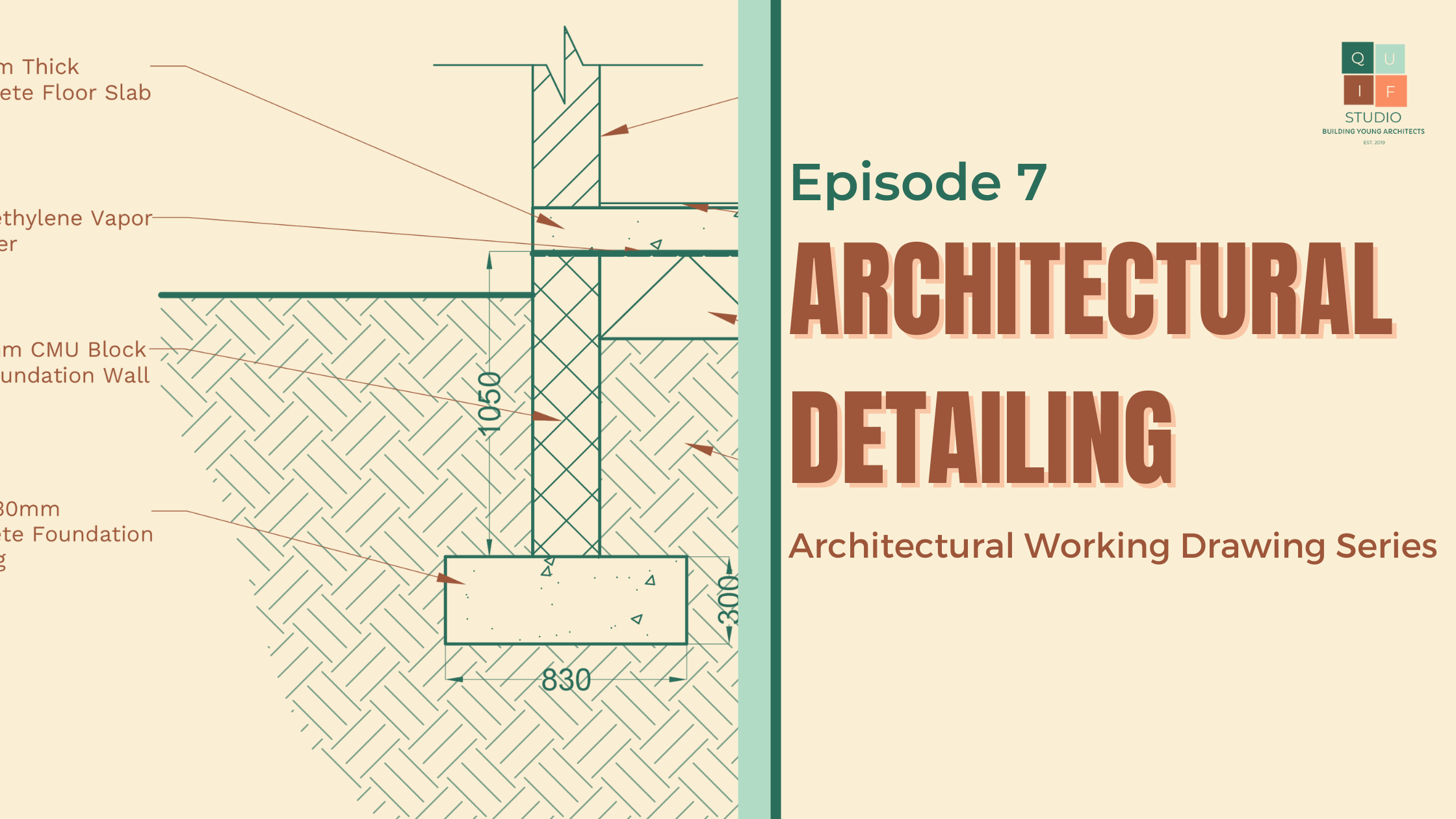
Simply put, details are drawings that show the assembly of building components. They show how parts are connected and how they interact with each other. These drawings are done to provided detail information of building components which allow them to be built in real-time. Details can either show technical details which are mainly construction related or design details which show aesthetic elements in a building.
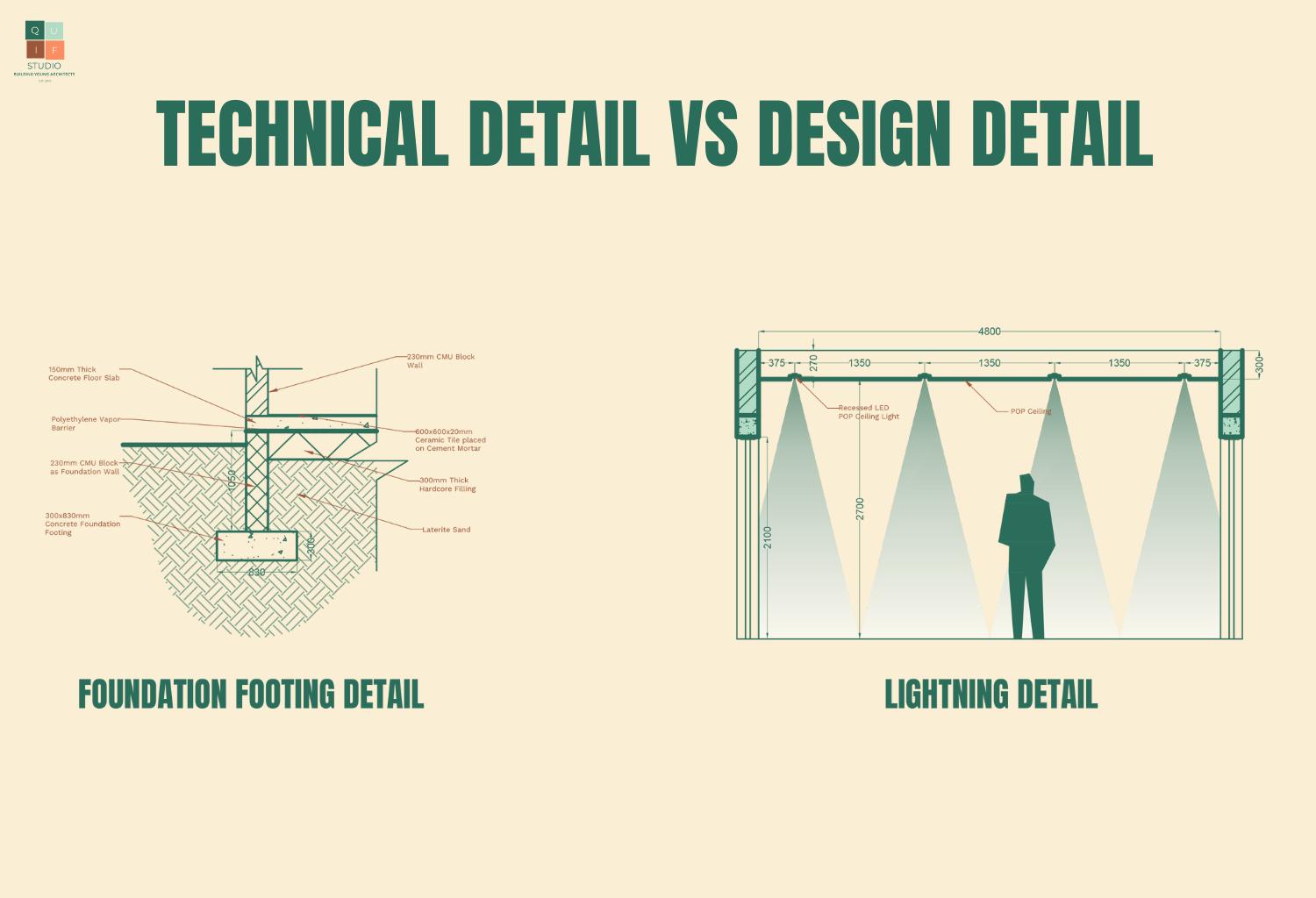
Technical Detail VS. Design Detail

Why are Details important?

  1. Proper details allow for a smoother construction process.
  2. Details allow a more detailed description of the scope of work. They allow for precise bidding which can save money in the long run.
  3. They give the ability to control the quality of a project and ensure the final result is exactly as envisioned by the architect.
  4. They ensure clear communication between the architect and the contractor.
  5. Well-detailed buildings lead to a sense of thoughtful design that gives an air of quality to a project.
  6. The time and care invested up-front in the process through details lead to fewer issues with maintenance and renovations long-term.

Important Areas for Details

Here are some key areas that require details:

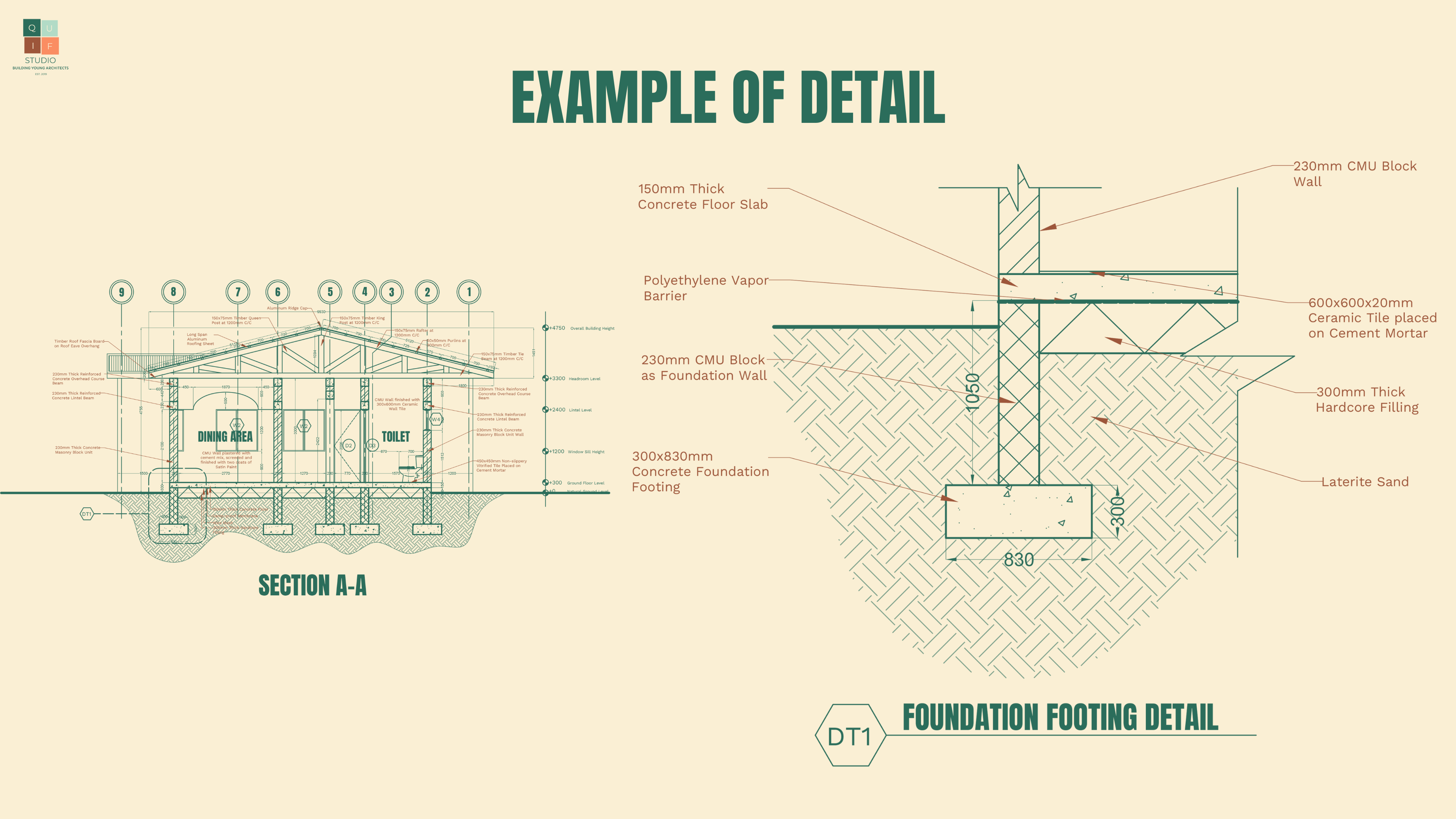
  1. Structural Elements: From the roots of the building to its highest branches, details here keep everything standing tall and strong. Examples of this can be foundation footings, Damp-proof Membrane Course (DPC), beam to column joints, etc.
  2. Facades and Finishes: This is where the aesthetics come into play. The details of materials and finishes can turn a drawing into a visual masterpiece. Examples include wall panel details, cladding details, tile skirting details, etc.
  3. Doors and Windows: Imagine doors that don’t quite fit or windows that won’t open – details here make sure everything works as it should. Examples include window sill details, door hinge details, etc.
  4. Stairs and Ramps: Here, dimensions and specifications ensure safe and stylish ways to move around the building.
  5. Roof Structures: From the rafters to the fascia, details guarantee a roof that not only keeps the rain out but looks good doing it. Examples include rafter details, roof eave details, roof ridge details, gutter details, etc.

Elements of Details

In drawing details, here are the major elements that can be seen in the drawing:

  1. Scale

The purpose of details is to expose how building components interact and how they can be assembled, therefore, they should be drawn in a scale that allows for those components to be visible. Larger scales are required for details. The scales can range from 1:25, 1:20, or 1:10.

  • Dimensions

The sizes of all the detail components should be properly indicated to ensure proper communication.

  • Symbols and Annotations

Proper symbols and annotations should be used when drawing details. Materials should be indicated in their appropriate

  • Specifications

The building components should be properly specified in detail drawings. The specification should include the material and how it may interact or be connected with another material.

You should ensure to indicate the location of any detail that you choose to draw in the appropriate drawing.
Conclusions

In conclusion, architectural detailing serves as the cornerstone of a building’s charm and functionality. Much like a well-crafted story, these details weave together to define the visual and structural character of a structure. This blog post aimed to underscore the significance of paying attention to architectural detailing, empowering you to enhance your designs and create spaces that not only meet practical needs but also captivate with their unique aesthetic flair. Armed with a focus on these details, don’t be afraid of drawing details, you’re now better equipped to elevate your architectural endeavors with precision and style.
Architectural Working Drawing Series, Design, Education

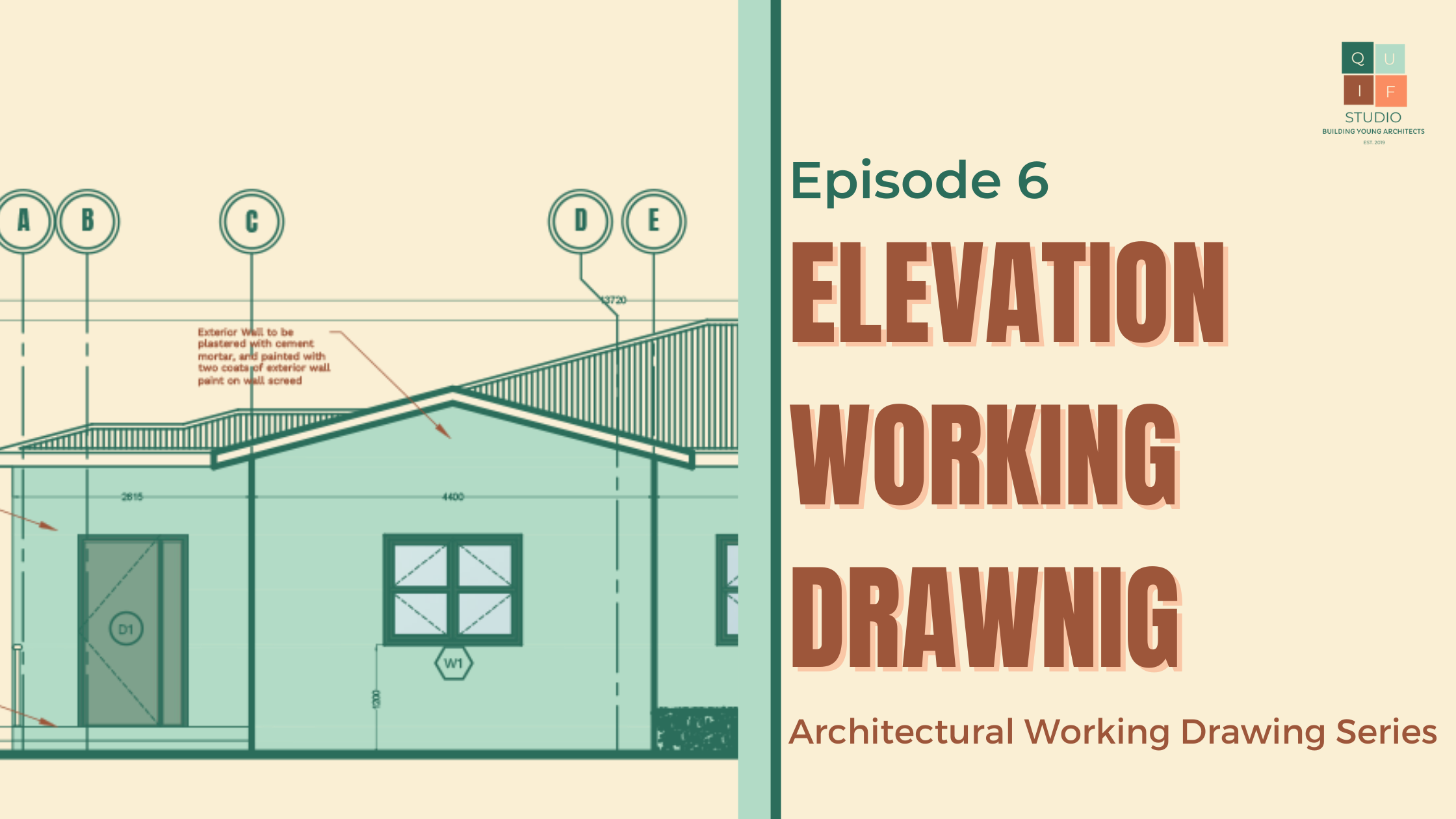
Episode 6: Elevation Working Drawings

Elevation working drawings, like their counterparts in floor plans and section drawings, serve as an indispensable guide in the realm of architecture and construction. These drawings offer a vertical perspective on a building’s façade, encapsulating the very essence of its external appearance. Just as floor plans provide insight into the layout of a structure, section drawings unravel its inner workings, elevation working drawings reveal the outward face that meets the world. These drawings not only convey the aesthetic design elements but also provide critical information about materials, proportions, and architectural details.

In this post, you will learn the information conveyed in these drawings, while also gaining invaluable insights into their critical role in the construction of buildings. Given that most information has been covered in previous drawings, the required information for elevations are as follows:

  1. Indicate levels of all floors, ceiling, parapet and assumed ground level.
  2. Indicate finishing to all surfaces.
  3. Indicate fixed and open-able parts of all doors and windows.
  4. Dimensions and sizes of all façade elements.
  5. Provide grid lines.
  6. Indicate areas (if any) where further details are provided in subsequent drawings or by other consultants or manufacturers.

Graphics of Elevation Working Drawing

  • Scale

Similar to sections, the scale for an elevation working drawing, should be large enough to expose details of the drawing. 1:50 can be adopted for relatively smaller buildings, while 1:100 can be adopted for larger buildings. However, it is necessary to blow out certain parts of the elevational drawing to a bigger scale to reveal more information.

  • Dimensions

All parts of the drawing should be fully dimensioned; however, repetition should be avoided to prevent confusion. Dimensions should be accurate and legible.

  • Symbols and Annotations

Symbols and annotations can be adopted from previous drawings and used where necessary.

  • Specifications

Materials and finishings should be fully specified in the drawing. This information can be provided in the drawing, in schedules or in the specification document of the project.

Elevation working drawings are the visual blueprints of a building’s external charm. Offering insights into design elements and material choices, these drawings play a pivotal role in bridging architectural concepts with tangible structures. This post aimed to highlight their significance, empowering you to navigate the intricacies of elevational design with precision and flair.

To have access to a complete checklist of information to be provided, you can click the download button below:

Example of elevation working drawing
Architectural Working Drawing Series, Design, Education

Episode 5: Section Working Drawings

The working drawings of a building’s various sections are an intricate puzzle of details, providing the vital blueprint for the construction process. Just as the floor plan working drawing unravels the spatial dimensions and design elements of a structure, section working drawings dive deep into the vertical dimension, offering an in-depth exploration of the building’s cross-sectional view. These drawings reveal the details of walls, openings, fixtures, staircases, and more, offering a comprehensive understanding of the structural components that shape a building’s form and function.

Much like the floor plan working drawing, section drawings also disclose the choice of materials and finishes employed, in addition to other graphical details that breathe life into the design. In this post, you will learn the information conveyed in section working drawings, while also gaining invaluable insights into their critical role in the construction of buildings.

Dimension and Sizes

  1. Dimension floor to ceiling.
  2. Dimension floor to lintel of doors and windows.
  3. Dimension floor to ceiling of windows.
  4. Dimension ceiling to lintel of windows.
  5. Dimension height of parapets
  6. Dimension risers, steps, half landing etc.
  7. Dimension thickness of slabs, pavement etc.
  8. Dimension height of ground floor above natural ground level.
  9. Dimension of balustrades, shelves, counters, worktops above floor levels.

Materials, Finishing and Levels

  1. Indicate level of all rooms through which section passes.
  2. Indicate floor finish of all rooms through which section passes.
  3. Indicate wall finish of all rooms through which section passes.
  4. State type of roofing sheets.
  5. State type of ceiling.
  6. State type of roof trusses (if further details are provided by other consultants, state so) and at what centers.
  7. State type of flashing to all walls.
  8. State finishing to concrete roof gutters.
  9. State type of skirting to all walls.

Opening and Fixtures

  1. Indicate width of all doors, windows and other openings.
  2. Indicate swings of all doors.
  3. Number all doors, windows and curtain walling etc.
  4. Locate all sanitary fittings and label them appropriately.
  5. Indicate position of all fixtures and label them appropriately.

Staircase and Ramps

  1. Width of all treads at staircases and all level changes.
  2. Number of all risers at staircases and all level changes.
  3. Indicate direction of flight at all staircases and all level changes.
  4. Indicate direction of the slope and the slope degrees/percentage.
  5. Indicate width of slope and all level changes.

Annotations and Additional Information

  1. Indicate functions of all rooms through which section passes.
  2. Provide grid lines.
  3. Indicate areas (if any) where further details are provided in subsequent drawings or by other consultants or manufacturers.

Graphics of Section Working Drawing

  • Scale

The scale for a section working drawing, should be large enough to expose details of the drawing. 1:50 can be adopted for relatively smaller sections, while 1:100 can be adopted for larger buildings. However, it is necessary to blow out certain parts of the sectional drawing with a bigger scale to reveal more information.

  • Dimensions

All parts of the drawing should be fully dimensioned; however, repetition should be avoided to prevent confusion. Dimensions should be accurate and legible.

  • Symbols and Annotations

Here are some symbols and annotations used in section working drawings:

Symbols and Annotations for Section Working Drawing
  • Specifications

Materials and finishing should be fully specified in the drawing. This information can be provided in the drawing, in schedules or in the specification document of the project.

Section working drawings are an essential part of the construction process, offering detailed insights into a building’s vertical aspects. They reveal the design elements, structural components, materials, and finishes crucial to transforming architectural vision into reality. Just as floor plan working drawings are vital for the horizontal layout, section drawings are indispensable for the vertical dimension.

To have access to a complete checklist of information to be provided, you can click the download button below:

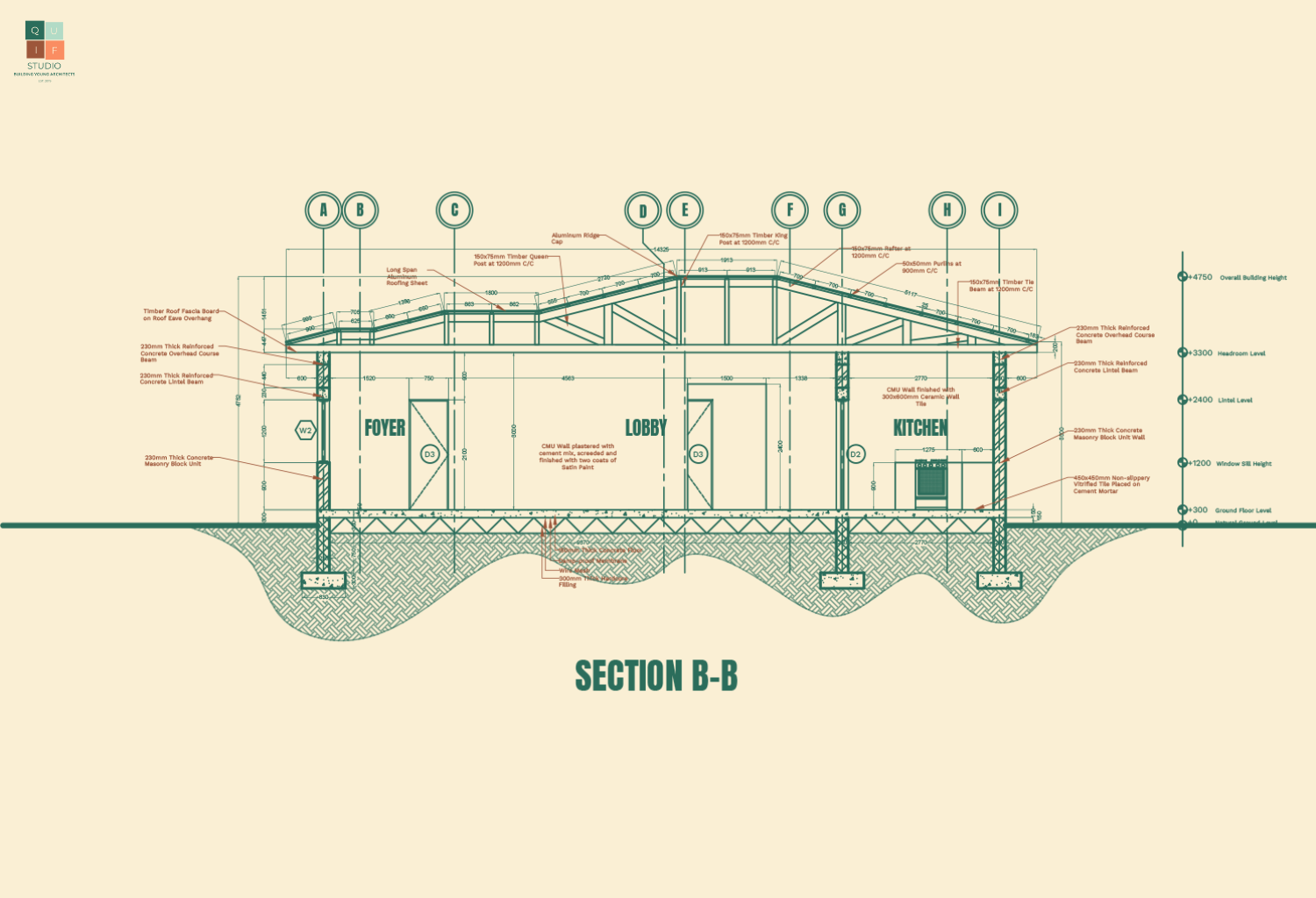
Example of Section Working Drawing (Section A-A)
Example of Section Working Drawing (Section B-B)
Architectural Working Drawing Series, Design, Education

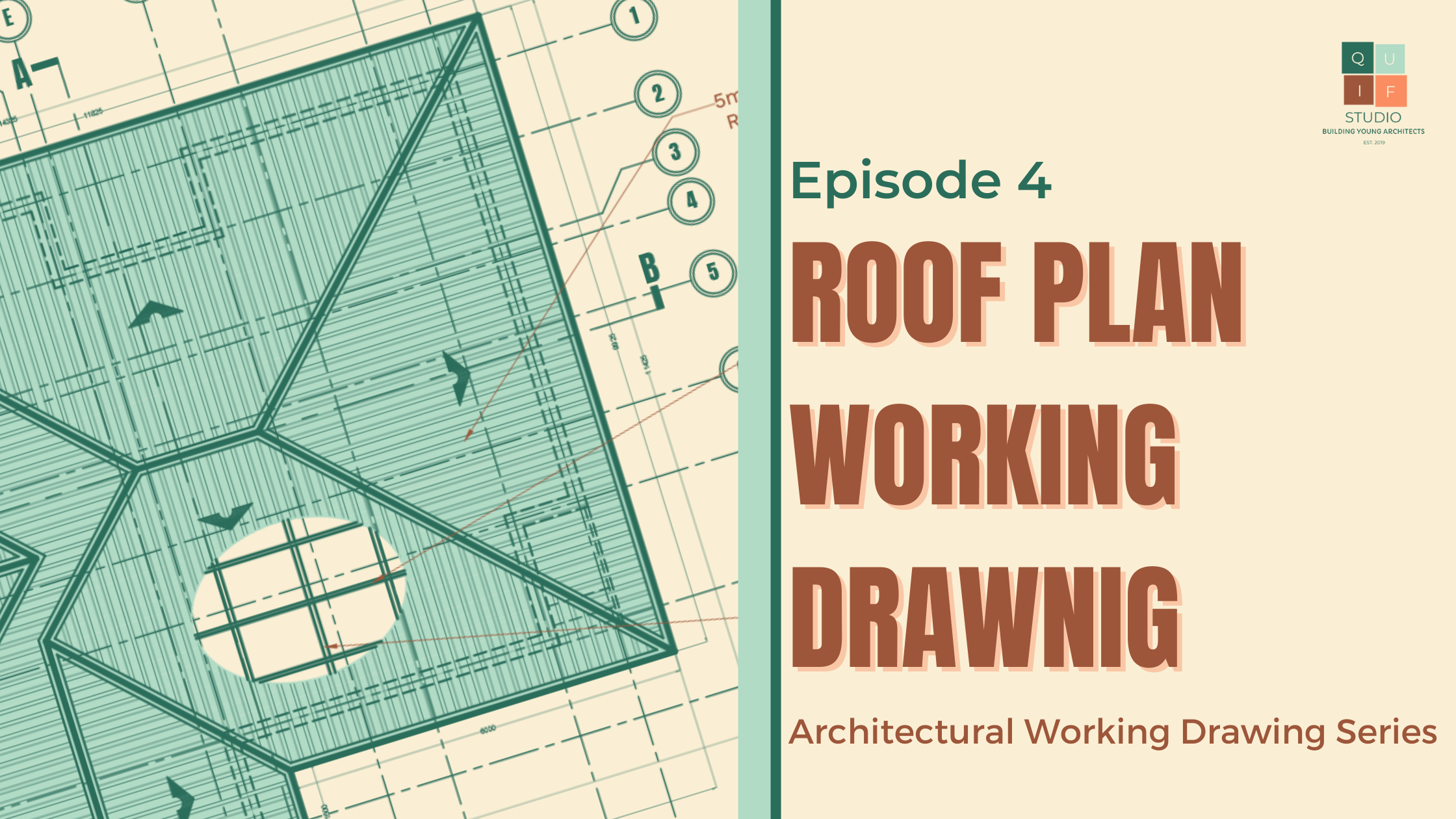
Episode 4: Roof Plan Working Drawings

The working drawing of a roof plan provides information about the roof and its elements. It provides us with the roof layout, materials to be used and the location of trusses and other roof elements. In this post, you will learn about the required information for the working drawing of a roof plan.

The information in a roof plan is categorized into the following:

Roofing Elements

  1. State roof trusses type and centres.
  2. Indicate position of spouts or rain water pipes.
  3. Indicate position of overhead tanks (if any).

Roofing Materials and Finishes

  1. State type of roof covering.
  2. State materials for trusses and other roofing elements.
  3. State finishing to all concrete gutters.

Annotations and Other Elements

  1. Indicate fall of roofing sheets or screed.
  2. Indicate grid lines.
  3. Indicate section lines.
  4. Indicate dimensions of roof and roof elements.

Graphics of Roof Plan Working Drawing

  • Scale

Similar to the floor plan working drawing, the size of a roof plan in working drawings should be large enough to expose details of the drawing. 1:50 can be adopted for relatively smaller roofs, while 1:100 can be adopted for larger buildings. However, some parts of the roof plan can be blown out with a bigger scale to reveal more information.

  • Dimensions

All parts of the drawing should be fully dimensioned; however, repetition should be avoided to prevent confusion. Dimensions should be accurate and legible.

  • Symbols and Annotations

Here are some symbols and annotations used in roof plan working drawings:

Symbols and Annotations of Roof Plan Working Drawing
  • Specifications

Materials and finishing should be fully specified in the working drawing. This information can be provided in the drawing, or in the specification document of the project.

In conclusion, creating a roof plan is an indispensable skill in the field of architecture and design. This essential element not only adds the finishing touch to a building’s aesthetic appeal but also plays a pivotal role in ensuring structural integrity and weather protection. The detailed specifications and annotations within a roof plan serve as an invaluable guide, facilitating the realization of your architectural vision with precision and efficiency. As architects and designers, mastering the art of crafting roof plans is an essential step towards turning your creative concepts into tangible structures that stand the test of time.

To have access to a complete checklist of information to be provided, you can click the download button below:

Example of Roof Plan Working Drawing
Architectural Working Drawing Series, Design, Education

Episode 3: Floor Plan Working Drawings

The working drawing of a floor plan gives a lot of information which is vital to the construction process of buildings. It tells us the sizes and dimensions of all design elements of the plan which ranges from the walls, openings, fixtures and staircases. It also tells us the type of materials and finishes used as well as other graphical details about the building. In this post, you will learn about all the required information for the working drawing of a floor plan.

Dimensions and Sizes

The dimensions and sizes of each building element is required. This includes the following:

  1. Overall dimension of building on all sides.
  2. Internal dimension of all rooms, corridors, verandas etc.
  3. Internal dimensions of all recesses, wardrobes, cupboards, counters etc.
  4. Thickness of all walls, partitions, etc.

Materials, Finishing and Levels

The following information must be indicated in the drawing:

  1. Indicate type of walls, i.e., block wall, brick wall, stone or timber etc.
  2. Indicate internal and external finishing schedules of the walls of all rooms.
  3. Floor finishes of all spaces including veranda, wardrobe etc.
  4. Floor levels of all places relative to a fixed datum.

Openings and Fixtures

The following information on openings and fixtures must be indicated in the drawing:

  1. Indicate width of all doors, windows and other openings.
  2. Indicate swings of all doors.
  3. Number all doors, windows and curtain walling etc.
  4. Locate all sanitary fittings and label them appropriately.
  5. Indicate position of all fixtures and label them appropriately.

Staircases and Ramps

The following information must be indicated in the drawing:

  1. Width of all treads at staircases and all level changes.
  2. Number of all risers at staircases and all level changes.
  3. Indicate direction of flight at all staircases and all level changes.
  4. Indicate direction of the slope and the slope degrees/percentage.
  5. Indicate width of slope and all level changes.

Annotations and Additional Information

  1. Indicate function of all rooms including semi-open spaces.
  2. Indicate all section lines.
  3. Indicate in broken lines extent of roof overhang, cantilevers etc.
  4. Provide grid lines (both ways).
  5. Indicate areas (if any) where further details are provided in subsequent drawings or by other consultants or manufacturers.

Graphics of Floor Plan Working Drawing

  • Scale

The size of a floor plan in working drawings should be large enough to expose details of the drawing. The scale depends on the size of the building. 1:50 can be adopted for relatively smaller floor plans, while 1:100 can be adopted for larger buildings. However, some parts of the floor plan can be blown out with a bigger scale to reveal more information.

  • Dimensions

Dimensions are a vital part of working drawings. All parts of the drawing should be fully dimensioned; however, repetition should be avoided to prevent confusion. Dimensions should be accurate and legible.

  • Symbols and Annotations

Working drawings are technical drawings therefore having many symbols and annotations for graphical representations.  All symbols and annotations should be accurate and easy to understand by all members of the construction team. Here are some symbols and annotations used in floor plan working drawings:

Symbols and Annotations found in Floor Plan Working Drawings
  • Specifications

Materials and finishing should be fully specified in the working drawing. This information can be provided in the drawing, or in the specification document of the project.

In conclusion, drawing a floor plan is a fundamental skill in architecture and design. It serves as the foundation for visualizing and communicating the spatial layout of a building. The working drawings and specifications provided in a floor plan can create a detailed and accurate guideline that effectively represents your design intent and help bring the design to reality in a seamless manner. To have access to a complete checklist of information to be provided, you can click the download button below.

Architectural Working Drawing Series, Design, Education

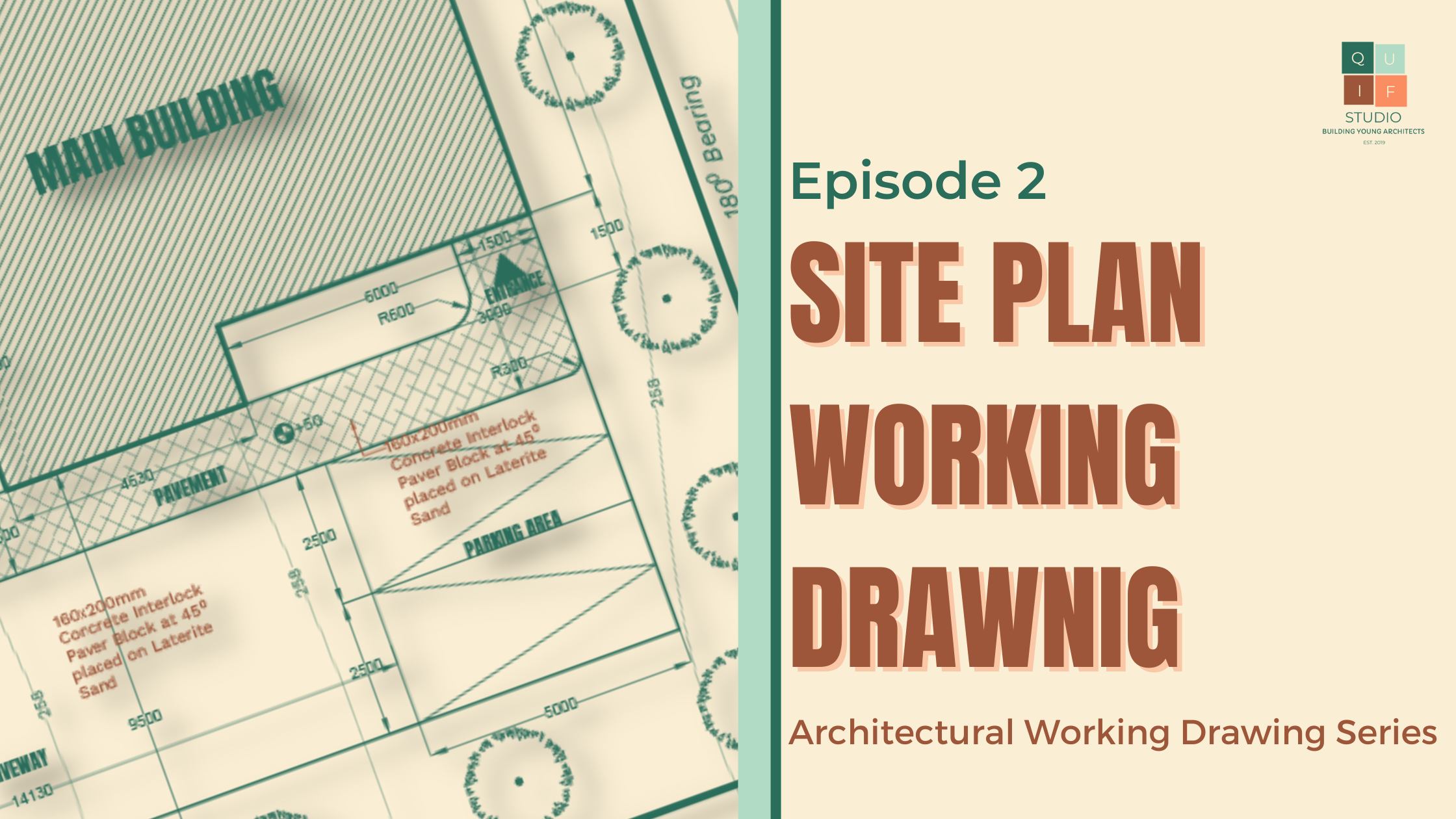
Episode 2: Site Plan Working Drawings

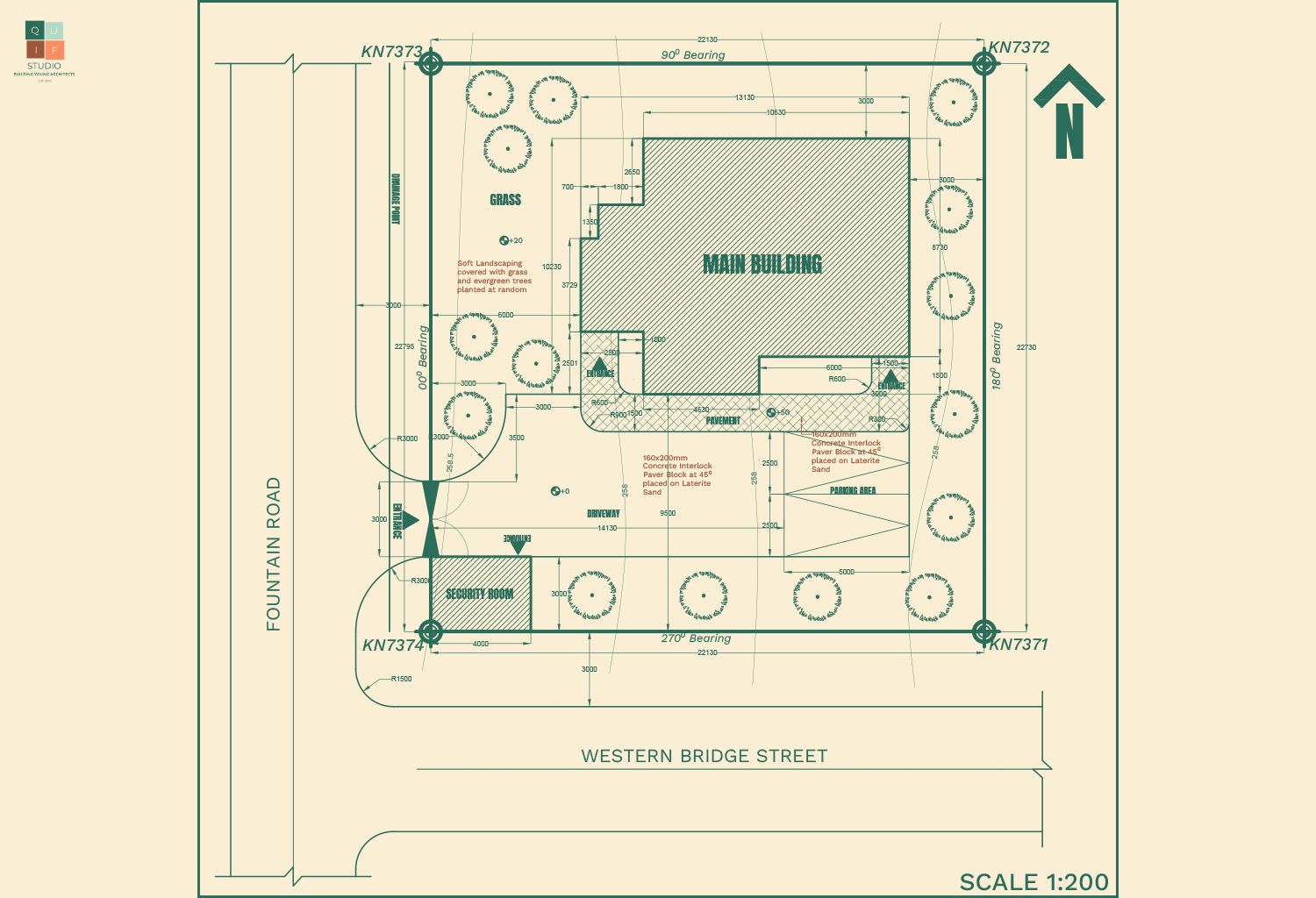
The working drawing of a site plan gives various information. It tells us the size of the land, the exact location of a building on the land, the orientation of the site, and all necessary dimensions and specifications. In this post, you will learn about all the required information for the working drawing of a site plan.

The Site

A site is a piece of land where a building is located on. This land has a size, geographical location, topography, orientation and soil type. These are identified during site analysis. In the process of producing a working drawing of the site, the following must be indicated:

  1. The overall dimension of each side of the site.
  2. The beacon number of each corner of the site. (a beacon number is placed on all the points of a piece of land indicating its boundaries usually provided by local planning authorities)
  3. Bearings of the sides of the site.
  4. Contour lines showing the topography of the site.
  5. Direction of North.
  6. Name of access and adjacent roads.
  7. The size and swing of all gates including pedestrian.
  8. Levels of drains and discharge point of all drains.

The Building

The relationship between the building and the site it is situated on is one of the major uses of a site plan drawing. The building size, its orientation and setbacks are some key elements we can identify on a site plan. The following information about the building in relationship to the site must be indicated in working drawings:

  1. The overall dimension (on all sides) of all buildings located on site.
  2. The setback on all sides or to adjacent building(s).
  3. The location of entrances on each building.
  4. The name of the building(s).
  5. The finished ground floor level of buildings relative to an agreed datum.

Landscapes, Pavements and Other Features

The surrounding of a building within a site can tend to have landscaping elements, walkways, pavements, driveways, etc. All these elements need to be identified and fully described in the working drawing of a site plan. The following information must be indicated in the drawing:

  1. The finished levels of all pavements, driveways etc.
  2. The finishes of all pavements, driveways etc.
  3. The length and width of all pavements, driveways etc.
  4. The location and type of landscaping, foundations, sculptures with dimensions and number.

Graphics of Site Plan Working Drawing

  1. Scale

The size of a site plan in working drawings should be large enough to expose details of the drawing. The scale depends on the size of the drawing. 1:100 can be adopted for relatively smaller sites, while 1:200 can be adopted for larger sites. However, some parts of the site can be blown out with a bigger scale to reveal more information.

2. Dimensions

Dimensions are a vital part of working drawings. All parts of the drawing should be fully dimensioned; however, repetition should be avoided to prevent confusion. Dimensions should be accurate and legible.

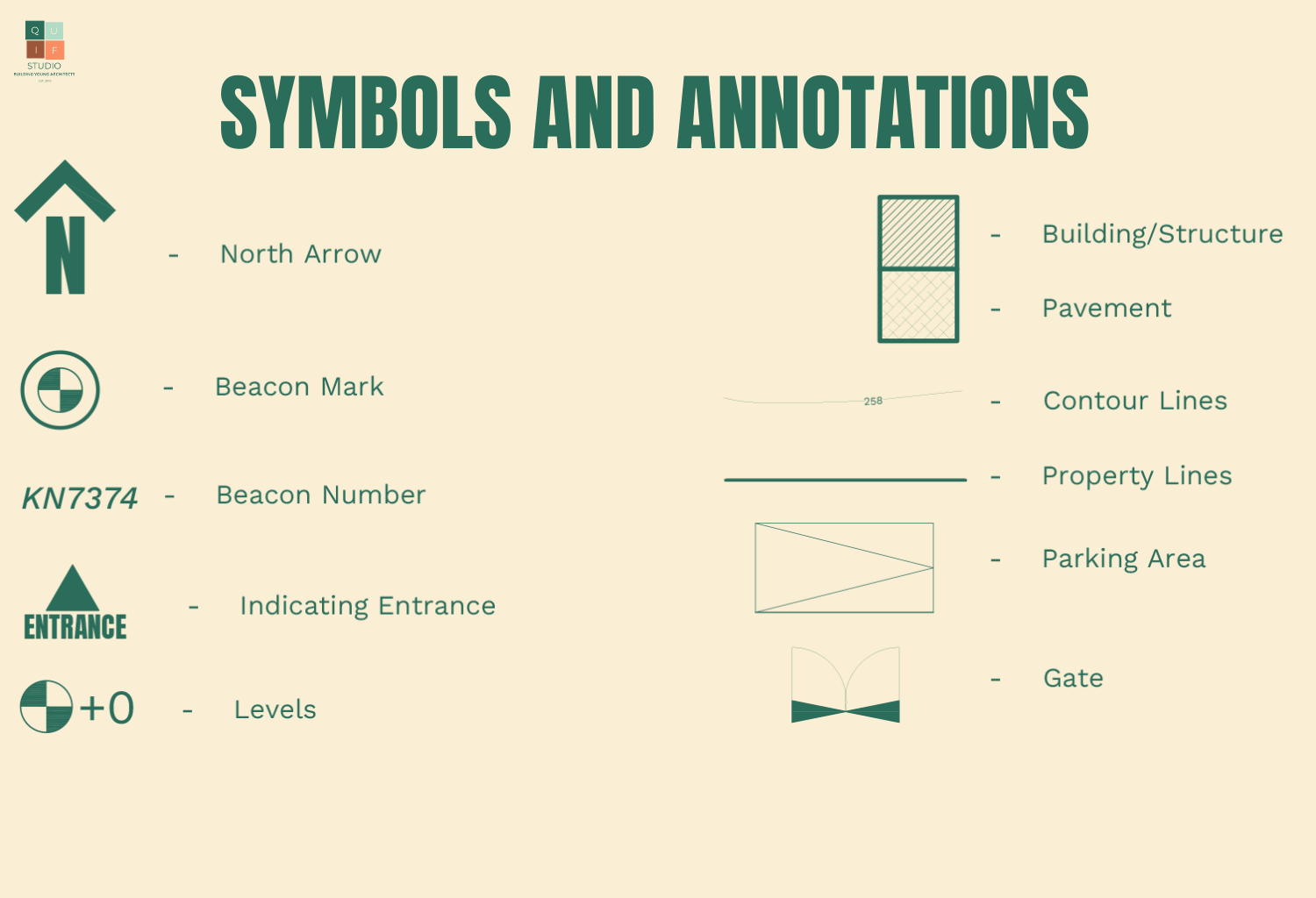
3. Symbols and Annotations

Working drawings are technical drawings therefore having many symbols and annotations for graphical representations.  All symbols and annotations should be accurate and easy to understand by all members of the construction team. Here are some symbols and annotations used in site plan working drawings:

Symbols and Annotations of a Site Plan Drawing

4. Specifications

Materials and finishing should be fully specified in the working drawing. This information can be provided in the drawing, or in the specification document of the project.

A site plan is helpful during the setting out of a project, therefore the information provided should be accurate and well described. To have a better view of a site plan working drawing and access to a complete checklist of information to be provided, you can click the download button below.

Site Plan Working Drawing
Architectural Working Drawing Series, Design, Education

Episode 1: Understanding Working Drawings

In architecture, the design of buildings in one of the primary responsibilities of an architect. The design is represented in 2-dimensional and 3-dimensional drawings. However, these drawing comes in many forms to enable those designs to be translated on site.

In the Architectural Design Series, the type of drawing used is called presentation drawings. Presentation drawings are drawings used for the purpose of presentation either to a client, the public, or for school purposes. These drawings show the functional arrangement and design of spaces without much detail in terms of the construction.

For the purpose of construction, drawings are prepared separately with complete dimensions and specifications of the design. These drawings are called construction drawings or working drawings.

Working drawings are used for the following purposes:

  1. To convey technical information to the building team which include engineers, builders, and quantity surveyors.
  2. To give full dimensions and specifications of the design, building materials and how they will be assembled on site.
  3. To provide information that will guide the cost estimation of the project.
  4. To provide construction details.
  5. To identify the type of labour and workmanship needed for a project.
  6. To form part of construction documents and tendering processes.

Working drawings should be comprehensive and easy to understand. Proper design graphics and graphical representation should be adopted. The drawings should be drawn accurately, properly dimensioned and all notes should be short and precise (try to avoid unnecessary repetition). Lastly, they should be drawn to an appropriate scale which allows for a detailed view of every aspect of the design.

Working drawings consist of the following drawings:

  1. Site Plan
  2. Foundation Plan
  3. Floor Plan(s)
  4. Roof Plan
  5. Sections
  6. Elevations
  7. Construction Details
  8. Reflected Ceiling Plan(s)
  9. Schedules and Specifications

Other working drawings that are produced by other professionals include:

  1. Structural Plans
  2. Electrical Plans
  3. Plumbing Plans, etc.

For the purpose of this series, we will be focusing on the following:

  1. Site Plans
  2. Floor Plans
  3. Roof Plans
  4. Sections
  5. Elevations
  6. Construction Details
  7. Schedules and specifications

Stay tuned for the next post which discusses Site Plan Working Drawings.

Architectural Working Drawing Series, Design, Education

Architectural Working Drawing Series

Welcome to the launch of a new series called the Architectural Working Drawing Series. This series is designed to cover architectural working drawing. This type of drawing is done after we have fully developed a design. Working drawings have loads of information which help in turning a design into reality. They give detailed information about every aspect of a drawing from the dimensions, to the material to be used, and how it can be constructed.

Throughout the course of the series, we will be discussing all the components that go into architectural working drawing. Hence, the following is a list of upcoming episodes under this series:

  1. Understanding Working Drawings
  2. Site Plan Working Drawings
  3. Floor Plan Working Drawings
  4. Roof Plan Working Drawings
  5. Section Working Drawings
  6. Elevation Working Drawings
  7. Detailing
  8. Schedules and Specification Writing

Stay tuned for this series and comment down below what your expectations are. If you are a student, have you ever done working drawings? What do you like about it or what part challenges you the most?

 I would really appreciate your feedback. You can also email me with any suggestions from the Contact page.

Thank you for reading and stay tuned!